Optimize designs to reduce CNC machining costs without sacrificing quality.
The Hidden Costs of Precision
In the world of manufacturing, precision is paramount. However, there is a fine line between a high-performance part and a prohibitively expensive one. Often, the difference lies not in the material or the quantity, but in the design.
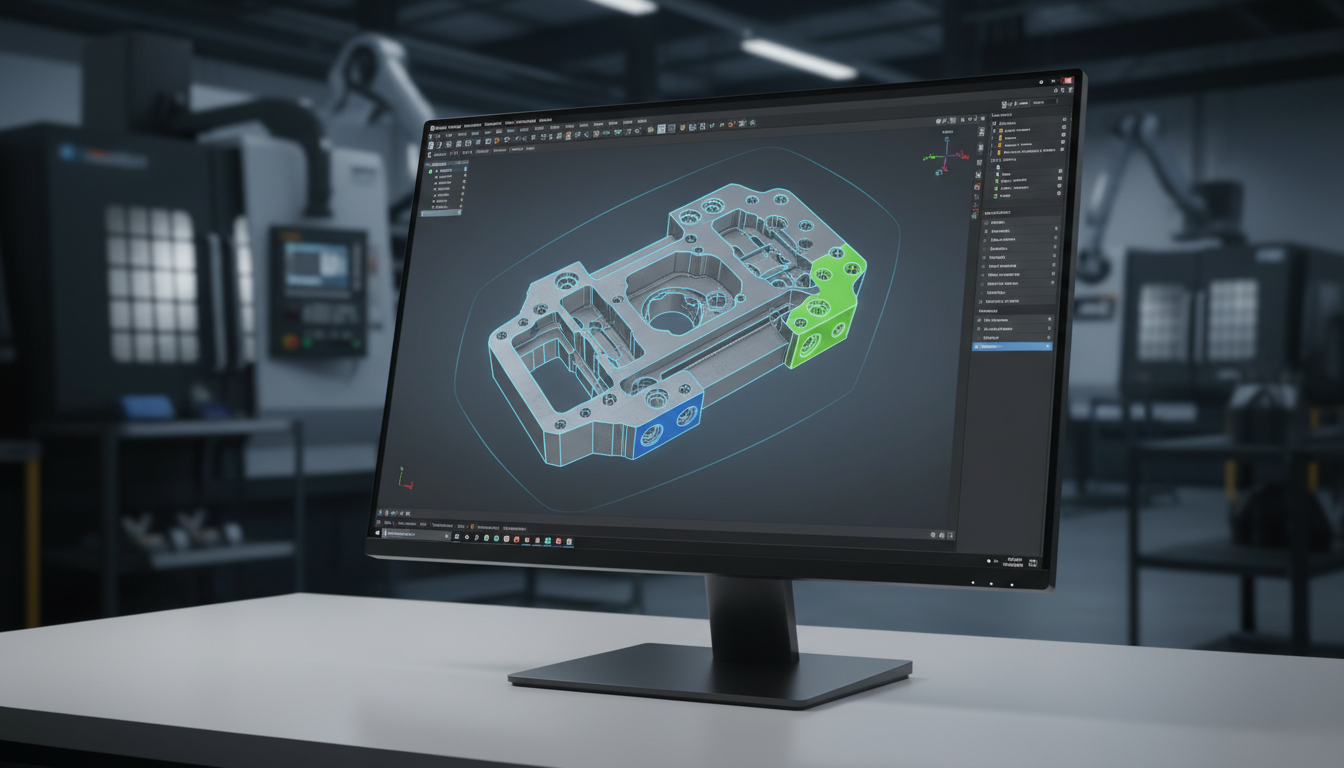
At Accura CNC Supply, we see thousands of CAD files every year. We’ve noticed that small adjustments in the design phase can lead to massive savings in the production phase. If you are looking to optimize your budget without sacrificing the integrity of your components, here are five industry-insider tips to lower your CNC machining costs.
1. Avoid Deep, Narrow Pockets
CNC tools are limited by their length and diameter. To machine a deep pocket, a shop must use longer tools, which are more prone to "deflection" (bending) and vibration. This forces the machinist to slow down the cycle time significantly to maintain accuracy.
The Pro Tip: Try to keep the depth of a pocket no more than 3-4 times its width. If you must have a deep cavity, consider designing it with a slight taper to allow for more tool clearance.
2. Standardize Your Internal Corner Radii
A common mistake in CAD design is specifying perfectly sharp 90-degree internal corners. Because CNC milling bits are round, they cannot cut a square corner. While "dog-bone" fillets or EDM (Electrical Discharge Machining) can create square corners, they add significant time and cost.
The Pro Tip: Use a radius slightly larger than the tool that will be used. For example, if a 1/4" end mill is required, design your corner with a .130" radius rather than exactly .125". This allows the tool to move smoothly through the corner without hitting a "dead stop," reducing tool wear and chatter marks.
3. Be Realistic with Tolerances
It is tempting to put a +/- 0.0001” tolerance on every dimension of a drawing to "be safe." However, tight tolerances require specialized inspection tools, slower machining speeds, and higher scrap rates.
The Pro Tip: Only apply tight tolerances to critical fitment areas (like bearing seats or mating surfaces). For non-functional surfaces, a standard tolerance (like +/- 0.005”) is much more cost-effective and will speed up your delivery time.
4. Limit the Use of Thin Walls
Thin walls (below 0.030” for metals) are a challenge for CNC machines. The pressure of the cutting tool can cause the material to warp or vibrate, leading to "chatter" and poor surface finishes. To compensate, machinists must take very light cuts, which adds hours to the job.
The Pro Tip: Keep your wall thickness above 0.060” (1.5mm) whenever possible. This ensures the part remains rigid during the machining process, allowing for faster speeds and a cleaner finish.
5. Simplify Tapped Hole Depths
Designers often assume that more threads mean a stronger hold. However, after a certain point, additional threads provide zero extra gripping strength. Deep tapped holes are one of the leading causes of broken taps—a mistake that can ruin an almost-finished part.
The Pro Tip: A good rule of thumb is to make the thread depth 1.5 to 3 times the diameter of the hole. Anything deeper increases the risk of tool breakage without providing a functional mechanical advantage.
The Accura Advantage: Partnering for Efficiency
At Accura CNC Supply, we believe the best parts are the ones that are engineered for efficiency. Our team doesn't just "hit start" on a machine; we review your designs to ensure you’re getting the most out of our high-precision equipment and skilled operators.
By implementing these DFM (Design for Manufacturability) principles, you can reduce lead times, lower your per-unit cost, and ensure a higher quality end product. Contact the Accura CNC Supply team today for a quote and a design review. Let’s build something better, together.
Get Started Today
Browse our equipment or contact us for a free consultation. Email info@accuracncsupply.com — we respond within 24 hours.
Ready to get started?
Browse our equipment inventory or get in touch with our team for expert advice on your next project.