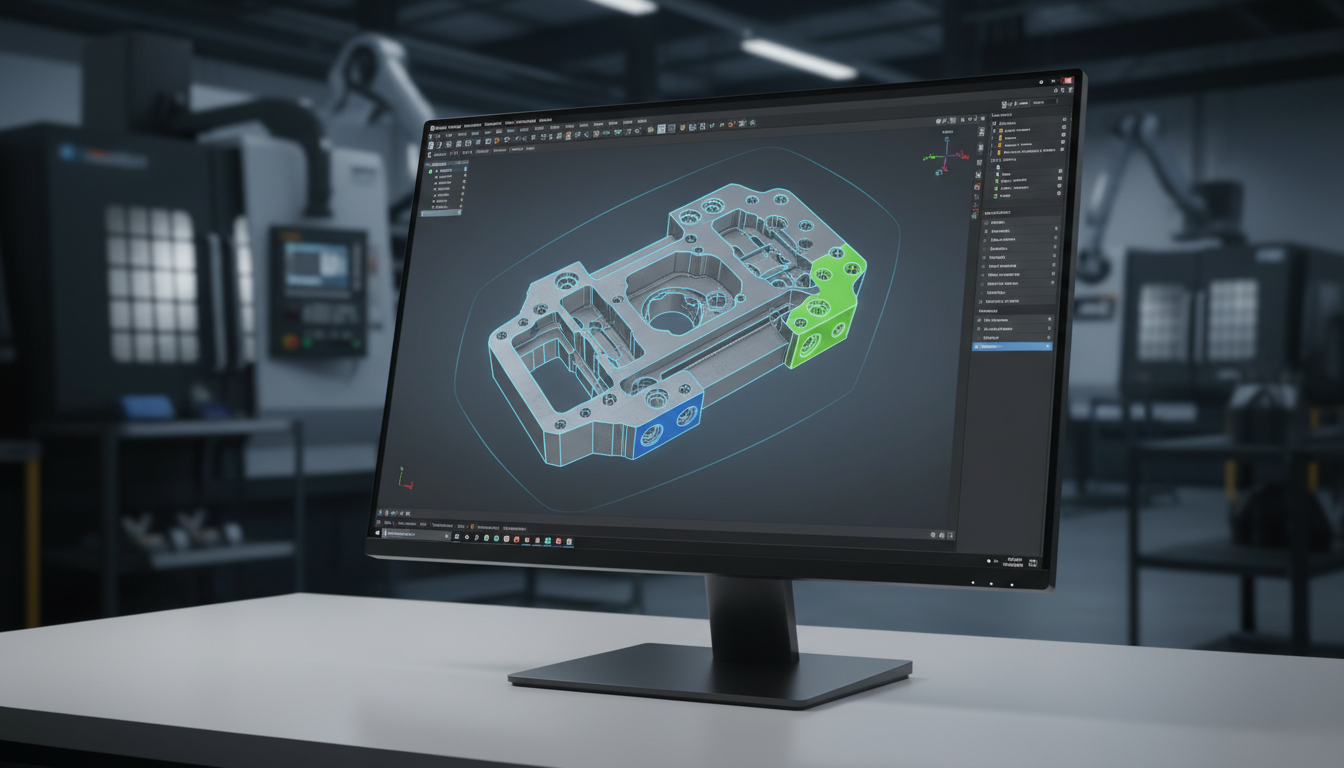
Explore how Ra values impact CNC part performance and cost, ensuring precision and efficiency in production.
Understanding the Importance of Surface Finish
When designing a precision component, the dimensions on the blueprint are only half the story. The surface finish—the texture of the part’s surface—is often what determines whether a component will succeed in the field or fail prematurely. At Accura CNC Supply, we see a wide range of specifications. However, "smooth" is a relative term. To ensure your project is both functional and cost-effective, it is vital to understand the science of surface roughness.
What is Ra? Understanding the Gold Standard
The most common measurement used in CNC machining is Ra (Roughness Average). It represents the arithmetic average of the profile height deviations from the mean line.
- 125 µin (3.2 µm) Ra: This is the standard "as-machined" finish. It is cost-effective and shows visible tool marks. It's perfect for non-critical brackets or internal structural parts.
- 63 µin (1.6 µm) Ra: A high-quality finish where tool marks are faint. This is often the "sweet spot" for parts that require a good seal or an aesthetic look without the high cost of secondary processing.
- 32 µin (0.8 µm) Ra: A very smooth finish used for high-stress parts subject to vibration or friction. Achieving this requires precision speeds, feeds, and often specialized tooling.
Why Surface Finish Matters for Your Project
Choosing the right finish isn’t just about aesthetics; it’s about engineering integrity:
- Friction and Wear: For moving parts or components that interface with seals, a rougher surface can lead to accelerated wear and tear.
- Corrosion Resistance: Smoother surfaces have fewer microscopic "valleys" where moisture and contaminants can collect, reducing the risk of oxidation.
- Fatigue Life: Micro-scratches from machining can act as "stress risers." In aerospace or medical applications, a finer finish can significantly extend the life of a part under cyclic loading.
The Cost of Over-Engineering
One of the most common pitfalls in part design is over-specifying the finish. It is tempting to call for a 16 µin finish on every surface "just to be safe." However, moving from a 63 µin finish to a 32 µin finish can significantly increase the machining time and require secondary operations like grinding or lapping.
Accura’s Tip: Only specify ultra-fine finishes on functional surfaces (like bearing seats or sealing faces) and allow for standard finishes on non-critical areas to keep your project on budget.
How Accura CNC Supply Ensures Precision Finishes
Achieving a perfect surface finish requires more than just a sharp tool; it requires a holistic approach to machining:
- Rigidity: Our high-end CNC equipment minimizes vibration (chatter), which is the primary enemy of a smooth finish.
- Tooling Strategy: We utilize specialized finishing inserts and coatings tailored to the specific material, whether it's 6061 Aluminum or 17-4 Stainless Steel.
- Coolant Management: Proper lubrication ensures chips are evacuated quickly, preventing "re-cutting" that can mar a surface.
Partner with the Precision Experts
Navigating the complexities of surface textures can be daunting. At Accura CNC Supply, we don’t just manufacture parts; we partner with you to optimize your designs for the best possible results.
Browse our CNC machines or contact us for a free consultation. Email info@accuracncsupply.com — we respond within 24 hours.
Ready to get started?
Browse our equipment inventory or get in touch with our team for expert advice on your next project.