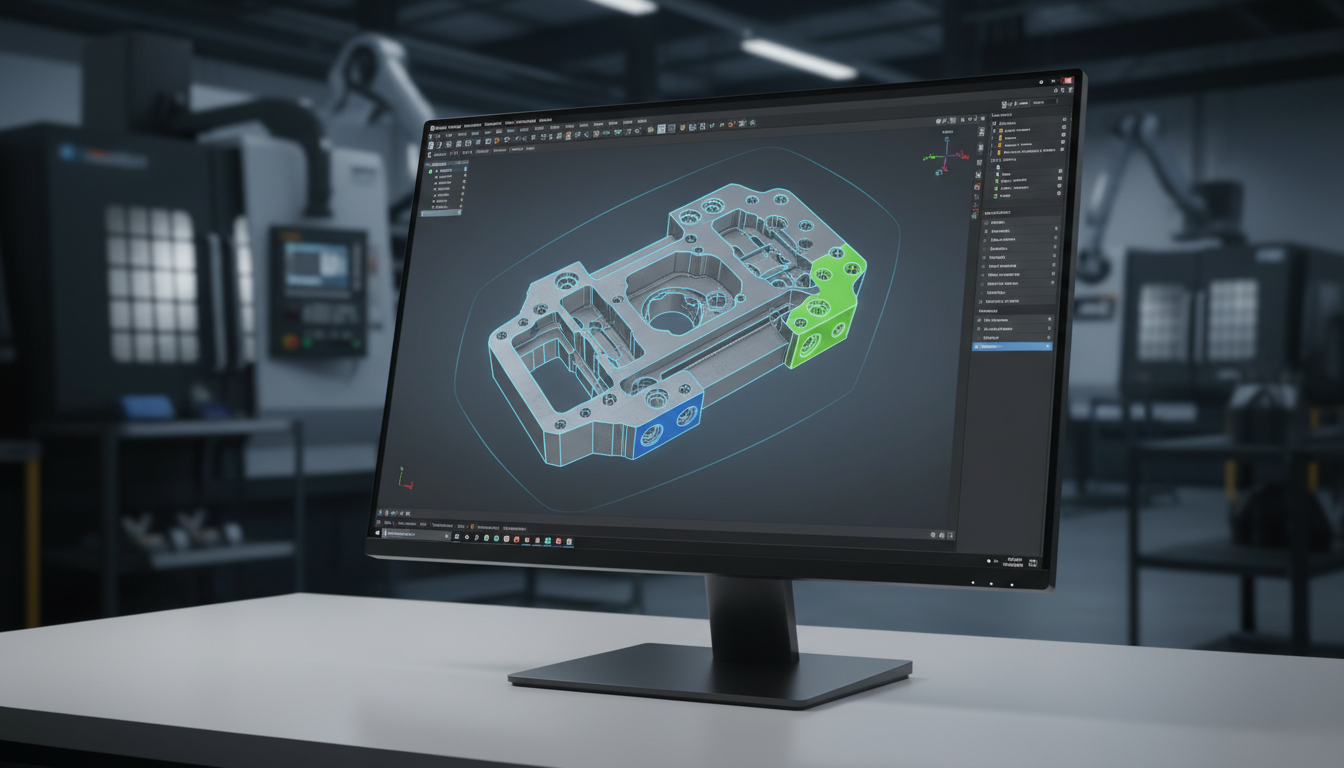
Explore how precision machining and understanding tolerance stack-up improve assembly efficiency and product quality.
Understanding the Importance of Tolerance Stack-Up
In the world of high-precision manufacturing, "close enough" is never enough. When designing a complex assembly—whether it's a medical device, an aerospace component, or a high-performance automotive housing—the success of the final product doesn't just depend on individual parts. It depends on how those parts interact.
At Accura CNC Supply, we often see projects where individual components meet their specific blueprint dimensions, yet the final assembly fails to function. The culprit? Tolerance Stack-Up.
What is Tolerance Stack-Up?
Tolerance stack-up is the cumulative effect of dimensional variations across multiple mating parts. Every part manufactured has some degree of variation (the "tolerance"). When you assemble five parts, each with a tolerance of +/- 0.005”, the total variation at the end of the assembly could be as much as 0.025”.
If your design doesn’t account for this "stack," parts may not fit together, moving components might seize, or seals may fail to provide a vacuum-tight fit.
Why High-Precision Machining is a Financial Strategy
Many procurement managers look for the lowest price per part. However, choosing a shop that struggles to hold tight, consistent tolerances often leads to "hidden costs" further down the line:
- Reduced Scrap Rates: When parts are machined with high repeatability (using our 5-axis and Swiss-style lathes), the likelihood of a part being rejected during assembly drops to near zero.
- Elimination of Manual "Fitting": In low-precision manufacturing, assembly technicians often have to manually file or sand parts to get them to fit. Precision machining ensures a "drop-in" fit every time, significantly reducing labor hours.
- Longer Product Lifespan: Parts that fit perfectly experience less friction, better heat distribution, and less vibration, leading to a more durable end product for your customers.
The Role of Material Selection in Tolerance
Precision isn't just about the machine; it’s about the material's behavior. Different materials react differently to the heat generated during CNC milling and turning.
- Aluminum (6061/7075): Great for speed, but has a high thermal expansion coefficient.
- Stainless Steel (303/316): Holds tolerances beautifully but requires expert tooling to prevent warping.
- Plastics (PEEK/Delrin): Requires specialized cooling to ensure the material doesn't "creep" after it leaves the machine.
Our team at Accura CNC Supply works with you during the prototyping phase to ensure the material chosen can realistically hold the tolerances required for your specific assembly environment.
How Accura CNC Supply Guarantees Assembly Success
We don't just "cut and ship." We utilize a holistic approach to ensure your assembly works the first time:
- Advanced Equipment: Our 5-axis milling and Swiss-style lathes allow us to machine complex geometries in a single setup. Fewer setups mean fewer opportunities for "datum shift," leading to much higher accuracy.
- Quality Control & Inspection: Using high-end CMM (Coordinate Measuring Machine) technology, we verify that parts aren't just within the "limit," but are consistently hitting the "nominal" target.
- Assembly Services: Because Accura offers in-house assembly, we understand the stakes. We can test the fit and function of your components before they ever leave our facility.
Get Started Today
Browse our equipment or contact us for a free consultation. Email info@accuracncsupply.com — we respond within 24 hours.
Ready to get started?
Browse our equipment inventory or get in touch with our team for expert advice on your next project.